Holy Eucharist
The Eucharist, or Communion, is both a sacrifice and a meal. We believe in the real presence of Jesus, who died for our sins. Holy Communion is the act of receiving the real presence of Jesus Christ's body and blood, transubstantiated from the bread and wine during Mass. As we receive Christ’s Body and Blood, we also are nourished spiritually and brought closer to God.
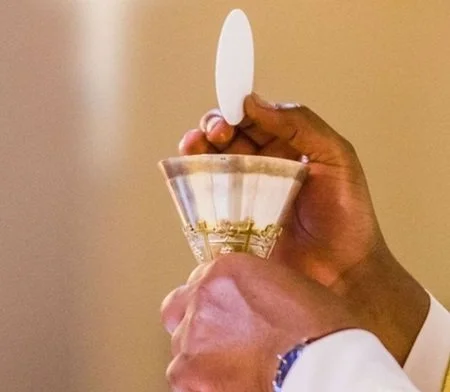
Communion to the Homebound
Anyone unable to attend Mass due to illness may receive Holy Communion at home on a regular basis. Please contact the rectory to make arrangements:
Phone: 718-528-0577
Email: rectory@sacredheartny.org
Common Questions - Holy Eucharist
Can I receive Communion even if I am not Catholic?
No. Only properly disposed Catholics may receive Holy Communion. The word Communion can also be seen as “comm-union”, or in other words, “union with”. Receiving the Body and Blood of Jesus Christ signifies a proclamation of this belief, as well as expression of unity and belief in the Catholic Church and all that she teaches.
What does it mean to be “properly disposed”?
To receive Communion worthily, a Catholic should:
Be in a state of grace (not conscious of grave/mortal sin)
Have fasted for one hour before receiving
Approach the sacrament with faith and devotion
What do I need to do to prepare to receive Holy Communion?
Catholics receive the Body and Blood, Soul and Divinity of Jesus Christ every time they receive Holy Communion. We believe that Jesus is truly present in the consecrated species of bread and wine. Communion must then be received with the greatest reverence and worship of our Lord.
If possible, the Church recommends fasting for at least one hour prior to receiving the Eucharist. The Church also recommends taking part in the Sacrament of Reconciliation as often as possible, but at least once every year, to prepare our souls to receive Jesus.
If there are any mortal sins that are in the way of your relationship with Jesus, Confession removes the mortal sin to prepare your heart prior to receiving Jesus in the Eucharist.
What should I do if I am not receiving Holy Communion?
Anyone not receiving Communion may remain seated in prayer or join the Communion procession and receive a blessing gesture by crossing their arms over their chest.
You may also make an act of spiritual communion, expressing your desire to be united with Christ.
How often do Catholics need to go to Mass?
Catholics are obliged to attend Holy Mass on all Sundays and holy days of obligation. The holy days of obligation are:
December 25th (Christmas)
January 1st (The Solemnity of Mary, Mother of God)
40 days after Easter Sunday (the Ascension of Jesus)
August 15th (the Assumption of the Blessed Virgin Mary)
November 1st (All Saints’ Day)
December 8th (Feast of the Immaculate Conception of The Blessed Virgin Mary)